Catering Menu Ideas: How to Build One for Your Event
Planning a catering menu for your event? Learn how to choose dishes, formats, and rentals that fit your guests. Start your plan with a quote today.
A catering menu is the set of dishes, drinks, and service choices you offer your guests, and it shapes the whole feel of your event. Whether you are planning a wedding, a company luncheon, or a backyard BBQ, the right menu feels personal and runs smoothly. In this guide, we walk you through how to build one, from service style and portions to seasonal ideas, dietary care, and pricing.
Quick answer: Start with your date, guest count, and venue. Then choose a service style, a cuisine, and dishes that suit your guests. Finally, confirm servers and rentals so the food and the setting work together.
What Is a Catering Menu?
A catering menu is a caterer's list of food, drinks, and service options for an event. It typically includes appetizers, mains, sides, and desserts. It also explains how the food is served, such as plated, buffet, or stations.
A good menu is not one-size-fits-all. Instead, it adapts to your guests, your venue, and the mood you want to create. That is why we build each menu with you rather than hand you a fixed package.
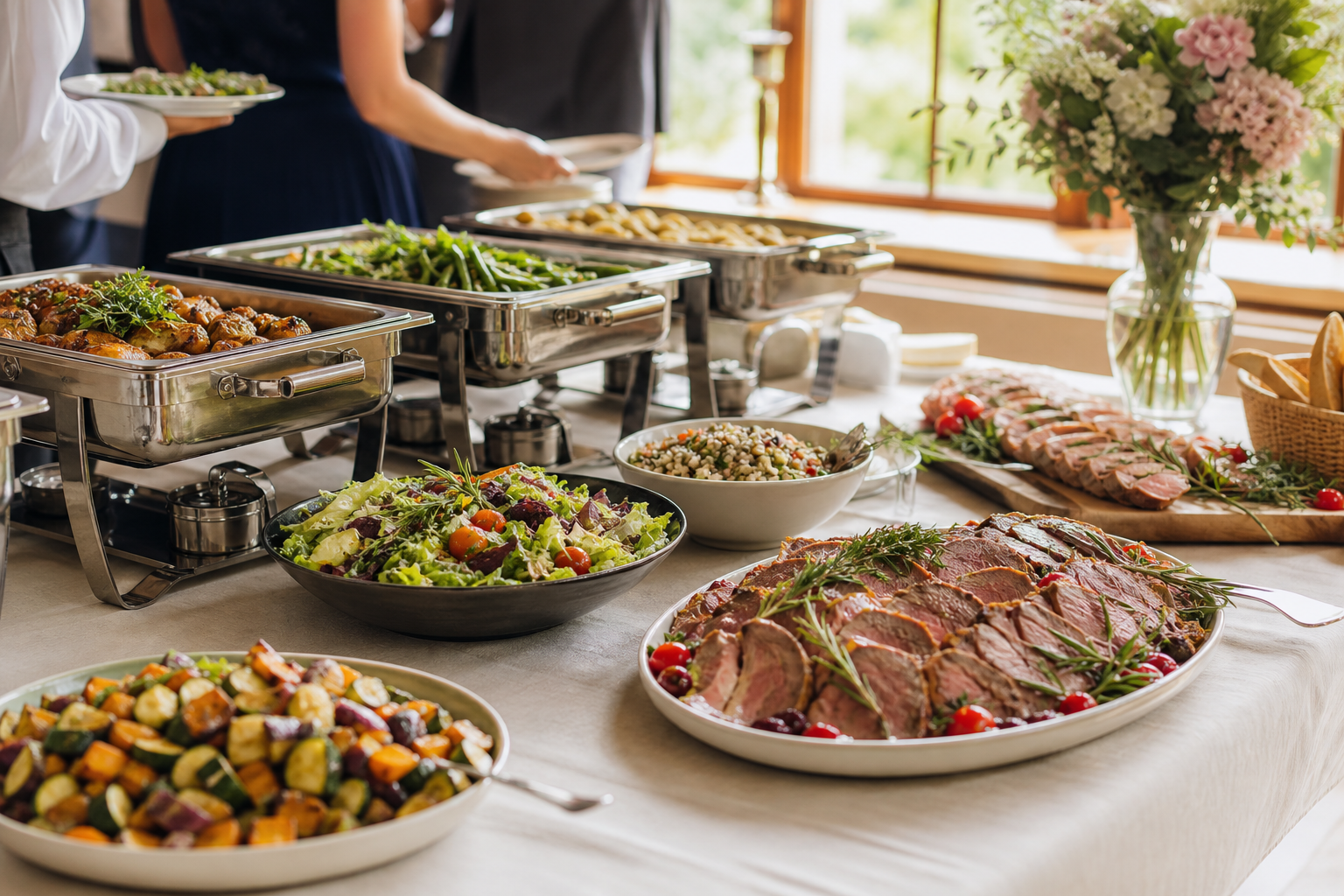
A well-planned catering menu pairs fresh dishes with a polished setting.
How to Build a Catering Menu in 6 Steps
Following a simple order keeps planning calm. As a result, you avoid last-minute changes and surprise costs.
- Set your date and guest count. Confirm both, along with your venue, so quantities and availability are accurate from the start.
- Choose a service style. Decide between plated dinners, buffets, stations, or grazing boards, because this choice drives staffing and budget.
- Pick a cuisine and key dishes. Select proteins, sides, and desserts that suit your crowd and the season of your event.
- Plan for dietary needs. Ask guests early about allergies and preferences, then share the answers with your chef.
- Add servers and rentals. Confirm staffing, linens, and dishes so the food and the setting arrive as one coordinated plan.
- Request a quote. Share your details, review the proposal carefully, and adjust the menu before you confirm.
Choosing a Service Style: Plated, Buffet, or Stations
Your service style affects the budget, the timeline, and how guests feel. For example, a plated dinner feels formal and keeps courses on schedule. A buffet offers variety and lets guests choose their own portions.
| Style | Best for | Keep in mind |
|---|---|---|
| Plated dinner | Weddings, formal dinners | Needs entree choices in advance |
| Buffet | Reunions, parties, mixed crowds | Needs space for a serving line |
| Interactive stations | Corporate events | Works best with clear traffic flow |
| Grazing boards | Cocktail hours, small gatherings | Pairs well with a heavier main course |
| Boxed meals | Meetings, trainings, tight schedules | Choose items that hold well |
Interactive Station Ideas
Stations turn eating into an activity. As a result, they work well when guests do not know each other. Popular options include:
- A taco bar with seasoned meats, vegetarian fillings, and fresh salsas
- A pasta station with two sauces and sautéed vegetables
- A build-your-own salad bar with grilled protein and house dressings
- A carving station with roasted turkey or prime rib
- A dessert bar with mini tarts and brownie bites
Platters, Boards, and Passed Appetizers
Platters and boards suit guests who mingle. For instance, a grazing table with cheeses, cured meats, fruit, and nuts keeps the room relaxed. Passed hors d'oeuvres, such as caprese skewers or bacon-wrapped dates, add a more formal touch during a cocktail hour.
Catering Menu Ideas by Time of Day
Beyond format, the clock matters. Morning guests want something light and fresh. Evening guests expect a fuller meal. Therefore, plan the dishes around the hour.
Breakfast and Brunch Menu Ideas
Breakfast dishes need to hold well for an hour without turning rubbery. Good choices include:
- Spinach and gruyère strata cut into squares
- Breakfast burritos with egg, potato, and chorizo or black beans
- A yogurt parfait bar with granola, berries, and honey
- Bagels with cream cheese and smoked salmon
- Coffee service with dairy and oat milk
A continental spread suits a short morning meeting. By contrast, an all-day training or a late-morning celebration calls for hot dishes and a frittata or waffle bites.
Lunch Menu Ideas That Travel Well
Lunch is the most common catered meal, so it should be easy to eat and easy to serve. Consider:
- A deli sandwich platter with halved sandwiches
- Grilled vegetable and hummus wraps
- Grain bowls with grilled chicken, chickpeas, and tahini
- Mediterranean pasta salad with olives and feta
- Individual salad boxes with dressing on the side
Dinner and Evening Event Ideas
Dinner is where presentation matters most. Herb-roasted chicken with pan sauce, maple-rubbed salmon, and sliced beef brisket are dependable mains. Butternut squash ravioli with brown butter and sage gives vegetarians a real entrée. Add wild rice pilaf, green beans almondine, and warm rolls to round out the plate. For a long evening, a late-night station of street tacos or loaded fries keeps the energy up.
Matching Your Catering Menu to the Occasion
Wedding Menu Ideas
Couples often choose a plated dinner or an elegant buffet. In addition, a cocktail hour with grazing boards gives guests something to enjoy while photos are taken. Two proteins or a few stations keep guests moving, and a late-night bite is a treat people remember. Learn more about wedding catering options for your day.
Corporate Event Menus
Business events need reliable timing and food that is easy to eat. Buffet stations suit conferences and company celebrations, while lighter spreads suit board meetings. Boxed meals work when the schedule is tight. See how corporate catering can be tailored to your schedule.
BBQ and Private Celebrations
Smoked meats and hearty sides are a natural fit for backyard gatherings and reunions. Pulled pork, BBQ chicken, slaw, and cornbread keep things relaxed and filling. Anniversaries and graduations, on the other hand, may call for a mix of comfort dishes and seasonal plates.
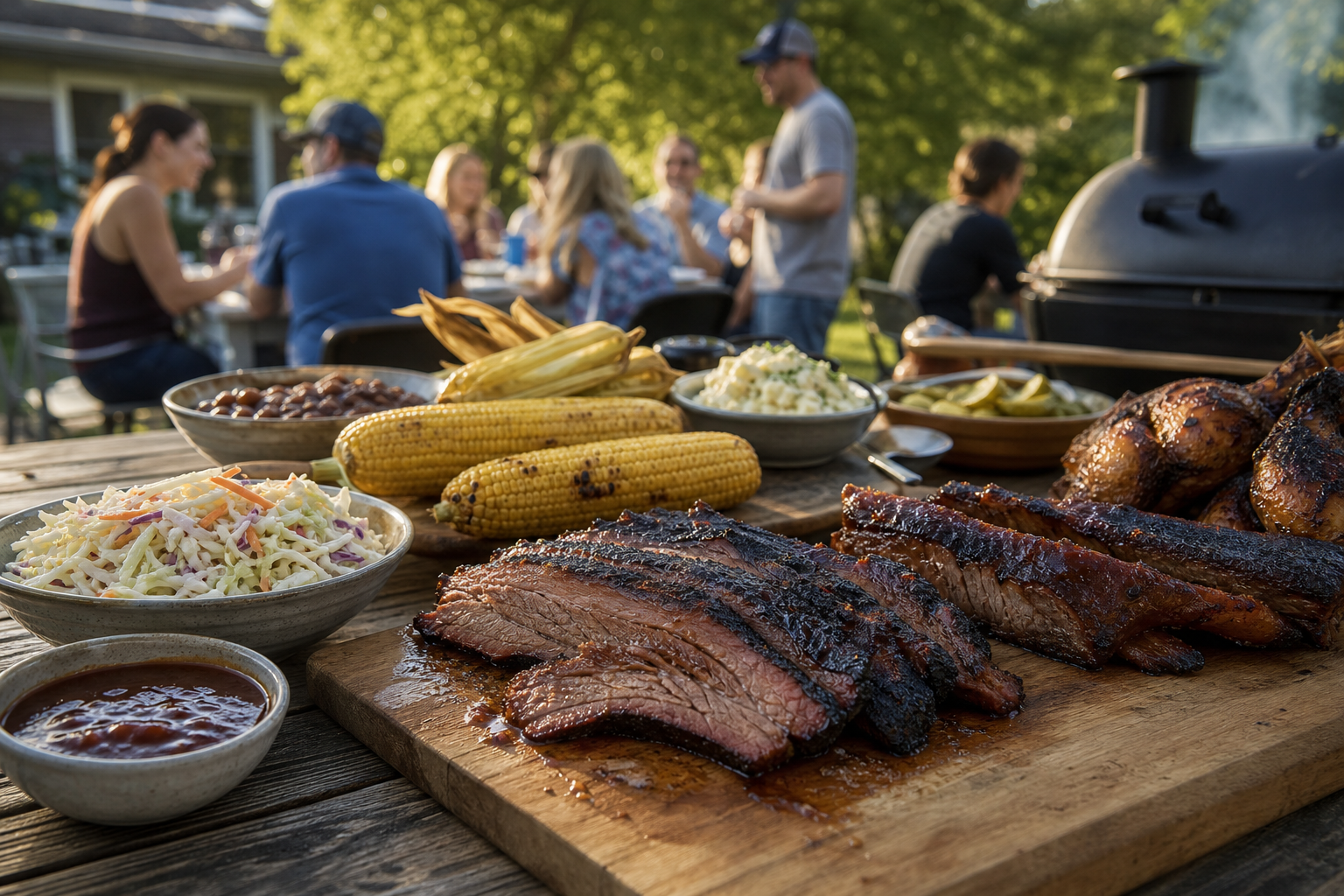
Barbecue is a crowd-pleasing choice for a relaxed event menu.
Menu Ideas for Large and Small Groups
Large Groups (50 Guests or More)
With a crowd, the real test is which dish still tastes good forty minutes into service. Choose foods with a sauce or braising liquid, because they resist drying out. Good examples are pulled pork with soft buns, baked ziti, chicken fajita trays, braised beef, and roasted vegetables. Sheet-pan desserts such as brownies finish the meal. Moreover, buffets usually need more food than plated service, since guests build their own plates.
Small Groups (Up to About 30 Guests)
Small parties have no serving line to hide behind, so guests notice every detail. Hand-finished items shine here. Try a charcuterie board, arancini, mini sliders, poke tacos, spinach and feta puffs, or whipped ricotta on grilled sourdough. Finish with individual desserts in small jars and sparkling mocktails with fresh garnish.
Catering Portions: How Much Food per Person
Portions are the most common worry when you plan a catering menu. As a general rule, plan about 1 to 1.25 pounds of total food per adult for a full dinner. For a cocktail-style event, plan about 0.5 to 0.75 pounds. The chart below shows typical planning ranges. Your caterer will fine-tune them for your menu.
| Category | Plated | Buffet | Cocktail |
|---|---|---|---|
| Protein | 6–8 oz | 4–6 oz | 4 oz |
| Starch | 4 oz | 5 oz | 2 oz |
| Vegetable side | 4 oz | 4 oz | 2 oz |
| Salad | 3–4 oz | 3–4 oz | 2 oz |
| Bread | 1–2 pieces | 1–2 pieces | 1 piece |
| Dessert | 1 serving | 1.5 servings | 2 oz |
Quick Rules for Special Formats
- Passed appetizers: 4–6 pieces per person per hour. A three-hour reception with no dinner means 12–18 pieces each.
- Grazing board: 3–4 oz of meat and cheese per person as an appetizer, or 5–6 oz as the main spread.
- Taco bar: 4–5 oz of protein and 1.5–2 tacos per guest.
- Family-style: add a buffer of about 20% so the last table is not left with scraps.
When to Adjust Portions
Every room is different. Offering two mains lowers the amount each guest takes of each one. Similarly, a business lunch or a senior group usually eats less. In contrast, a long event, hearty appetites, or a buffet line calls for more. Tell your caterer about your crowd, and they will adjust the totals.
Cuisine Options and Seasonal Ingredients
Variety makes a menu memorable. Premier Caterers and Party Rentals offers barbecue, Greek, Italian, sushi, Spanish, Mexican, grazing boards, and seasonal plates. Menus are built on fresh, seasonal, locally sourced ingredients and customized to each event.
Seasonal Catering Menu Ideas
Seasonal cooking has a practical benefit. Ingredients picked at their peak tend to taste better and look more vibrant on the plate.
- Spring: asparagus and pea salad with mint, and strawberry shortcake
- Summer: grilled vegetable skewers, gazpacho shots, and a watermelon and peach platter
- Fall: butternut squash soup, cranberry and brie stuffed chicken, and roasted root vegetables
- Winter: braised short ribs, a citrus and fennel salad, and a hot cider and cocoa station
Themed Menus by Cuisine
A theme simplifies choices. You stop picking from forty items, and the kitchen cooks one well-rehearsed set.
- Italian: antipasto salad, lasagna, and Italian green beans
- Mexican: a fajita bar with beans and rice
- Greek: make-your-own gyros with tzatziki and Greek salad
- Mediterranean: falafel, hummus, tabbouleh, and grilled halloumi
- BBQ: pulled pork, baked beans, and corn on the cob
Dietary Needs, Servers, and Rentals
Ask guests about allergies early. The U.S. Food and Drug Administration offers general information on food allergies that can help you ask the right questions. Then share the results with your chef so dishes can be planned and labeled.
Vegetarian, Vegan, and Gluten-Free Choices
The alternative should read as a real choice, not a consolation prize. For example, quinoa-stuffed peppers, a vegetable Wellington, or a potato and chickpea curry can stand on their own. A gluten-free pasta bake is best served with its own utensil. Finally, ask for every dish to be labeled with its allergens.
Servers, Linens, and Party Rentals
Next, think about the setting. Servers, linens, and dishes affect how smoothly the event runs. Because catering and party rentals come from one team, you have a single point of contact for food and setting. You can review the full list of services to see what fits.
Keeping Your Catering Menu on Budget
Price depends on guest count, menu, service level, location, and timing. Because of that, quotes vary widely from one event to the next. Still, a few choices reliably help you control cost.
- Choose platters over individual plates. They usually take less labor to prepare and serve.
- Lean on chicken, pork, and plant-based mains. They tend to cost less than beef and seafood.
- Keep the list focused. Fewer dishes mean shared prep and less waste.
- Cook with the season. Peak-season produce is often better value.
When you request a quote, ask what is included. Staffing, delivery, setup, linens, and rentals can be itemized separately, so compare proposals line by line.
Food Safety and Delivery: What to Ask Your Caterer
A great menu still has to arrive safely. The FDA Food Code sets model rules for safe handling, and the usual guideline is to keep cold food at 41°F or below and hot food at 135°F or above. Ask your caterer how food is held during transport and how long it will sit out at your venue. For more background, see the federal FoodSafety.gov resource. In short, a professional team can answer these questions easily.
Caterer or Restaurant: Where to Order Your Catering Menu
Many restaurants now offer takeout trays, and that can work for a simple office lunch. However, larger events usually need staffing, rentals, and a menu designed around your guest list. If you are comparing options, our guide on how to choose restaurants with a catering menu explains what to look for.
Planning a Catering Menu in the Poconos
Local knowledge helps with venues, timing, and ingredients. Premier Caterers and Party Rentals is led by Chef Brian Johnson, who has more than 20 years of culinary experience and follows up with inquiries personally. The team serves East Stroudsburg, Mount Pocono, and the greater Poconos. You can also read about catering in East Stroudsburg. Reviewers on Google rate the service 5 out of 5.
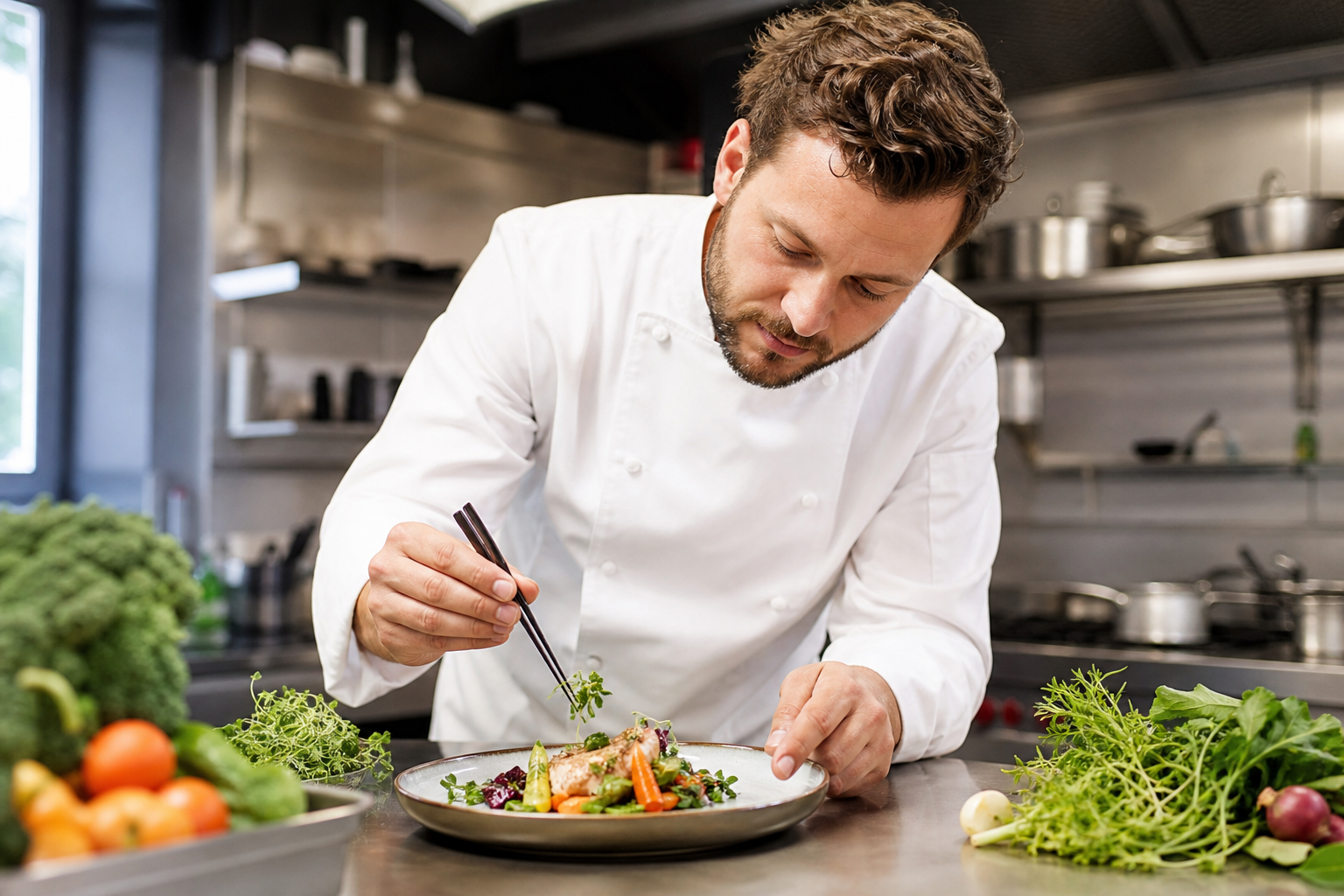
Chef-led preparation keeps every course fresh and well presented.
Frequently Asked Questions About Catering Menus
What is a catering menu?
A catering menu is the list of dishes, drinks, and service options a caterer offers for an event. It usually covers appetizers, mains, sides, desserts, and the style of service.
How much food do I need per person for catering?
Plan about 1 to 1.25 pounds of total food per adult for a full dinner, with 4–6 oz of protein on a buffet or 6–8 oz plated. For cocktail events, plan 4–6 appetizer pieces per person per hour.
Can a catering menu be customized to my event?
Yes. At Premier Caterers and Party Rentals, menus are customized to each occasion, guest count, and style of event.
How far ahead should I choose a catering menu?
Start as soon as you have a date and guest count. Weddings and large events benefit from early planning, while smaller gatherings can often be arranged on a shorter timeline.
What is the difference between plated and buffet service?
Plated service brings a chosen meal to each seat, while a buffet lets guests serve themselves. Plated feels formal, and buffets offer more variety and flexibility.
Do caterers provide servers and party rentals?
Many do, and it is worth confirming up front. At Premier Caterers and Party Rentals, catering and rentals such as linens and dishes come from one team and one point of contact.
How do I handle guests with allergies?
Collect dietary needs from guests before the event and share them with your chef. Ask how dishes are prepared and labeled, and request a separate serving utensil for each dish.
What are the most affordable catering menu ideas?
Pasta bakes, rice and beans, potato bars, sandwich and wrap platters, and sheet-pan desserts cost least. Platters are cheaper to produce than individual servings, and chicken or pork keeps the price down.
What catering menu ideas work for a wedding?
Passed appetizers or grazing boards during cocktail hour work well, followed by a plated dinner or a buffet with two proteins. A late-night station is a memorable add-on.
How do I get a quote for my date and guest count?
Use the Plan an Event quote request form or call (570) 460-8062. Share your date, guest count, and event type.
Conclusion: Your Menu, Your Vision
A great catering menu starts with your guest count, service style, and cuisine. From there, add sensible portions, dietary care, servers, and rentals. Fresh, seasonal ingredients and a coordinated setting make the day feel effortless. When you are ready, call (570) 460-8062 or send a quote request to Premier Caterers and Party Rentals and begin shaping your catering menu today.
